Project Details
Categories
Share
The Quays Solar PV & Battery Storage, Briton Ferry
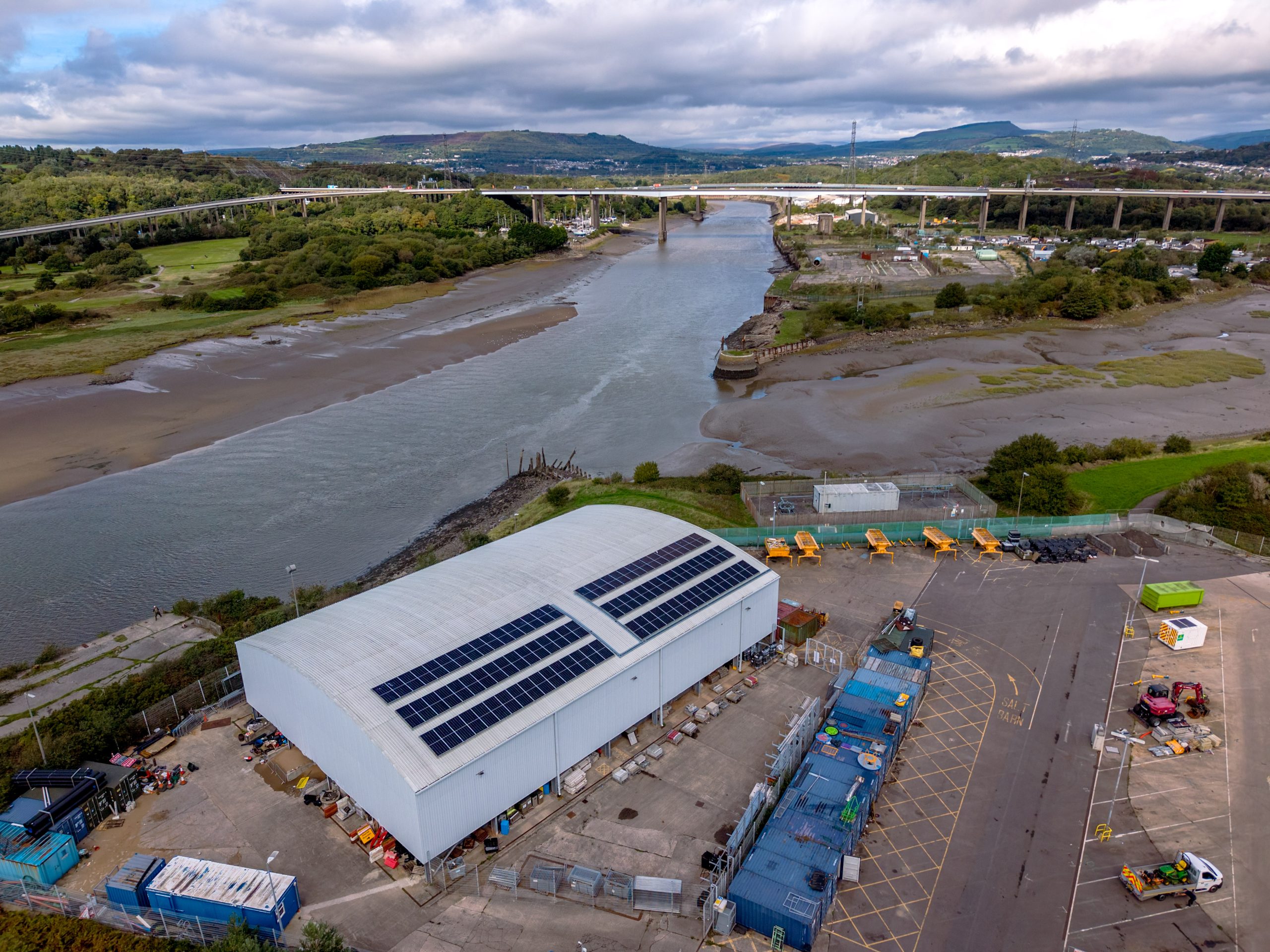
The Quays is Neath Port Talbot Council’s central administrative and service centre, supporting operations across the whole borough. The site has three major buildings. The first is the main office block. The second is the Service Response Centre (SRC), which houses the borough’s data centres and emergency response systems and supports the council’s Direct Labour Organisation. The third is the Salt Barn, which stores the borough’s road salt.
R&M Williams was appointed as principal contractor and principal designer to deliver rooftop solar PV and battery storage across the site. We installed 270 solar panels across two buildings and 320kW of battery storage in total, after the battery design was amended and expanded during the project.
Work began with structural surveys by Cardiff-based structural engineers Shear Design, who assessed all three buildings against our preliminary designs. We brought in a MEWP cherry picker and a scissor lift so the engineers could measure and inspect every accessible structural element and check it against the as-built drawings. The office block roof needed structural reinforcement and general repairs before it could take panels, so it was removed from scope. The SRC and Salt Barn both had the structural capacity for the additional PV loading.
The Quays runs on a single, highly complex electrical network. All three buildings feed into one system, backed up by diesel generators that can back-feed the network for up to four hours. This meant design verification, commissioning and import and export control with National Grid Electricity Distribution all had to be managed with great care. Once grid acceptance was received, works started at the Salt Barn in July 2026.
The site stayed fully operational throughout, with plant and machinery constantly moving through a live service yard. We worked with the council’s service managers to schedule deliveries. Our own telehandler handled all lifting, with a banksman present whenever it was booming up to a scaffold loading bay inside a segregated exclusion zone. Civils works included concrete pads, crash barriers and traffic management.
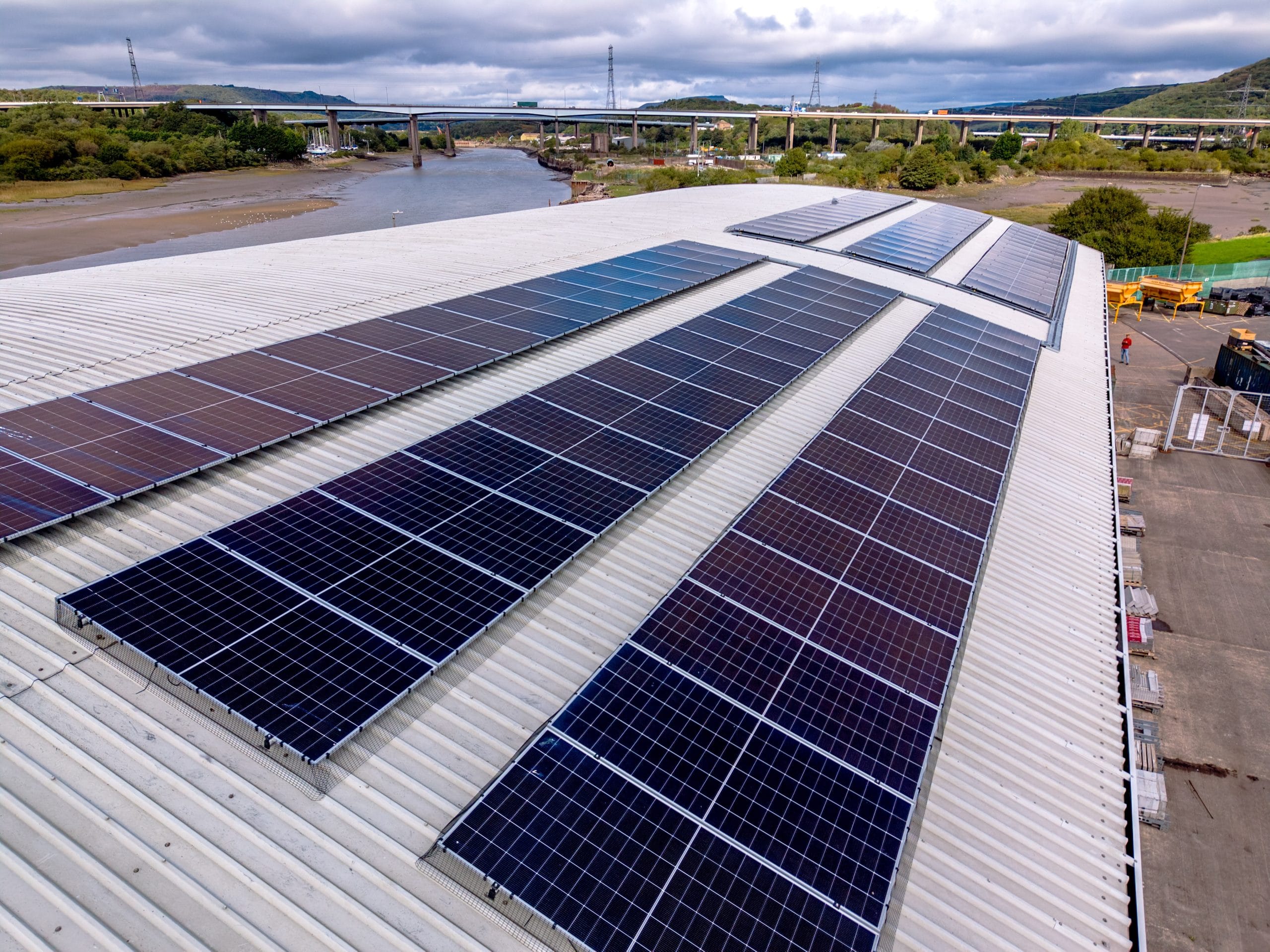
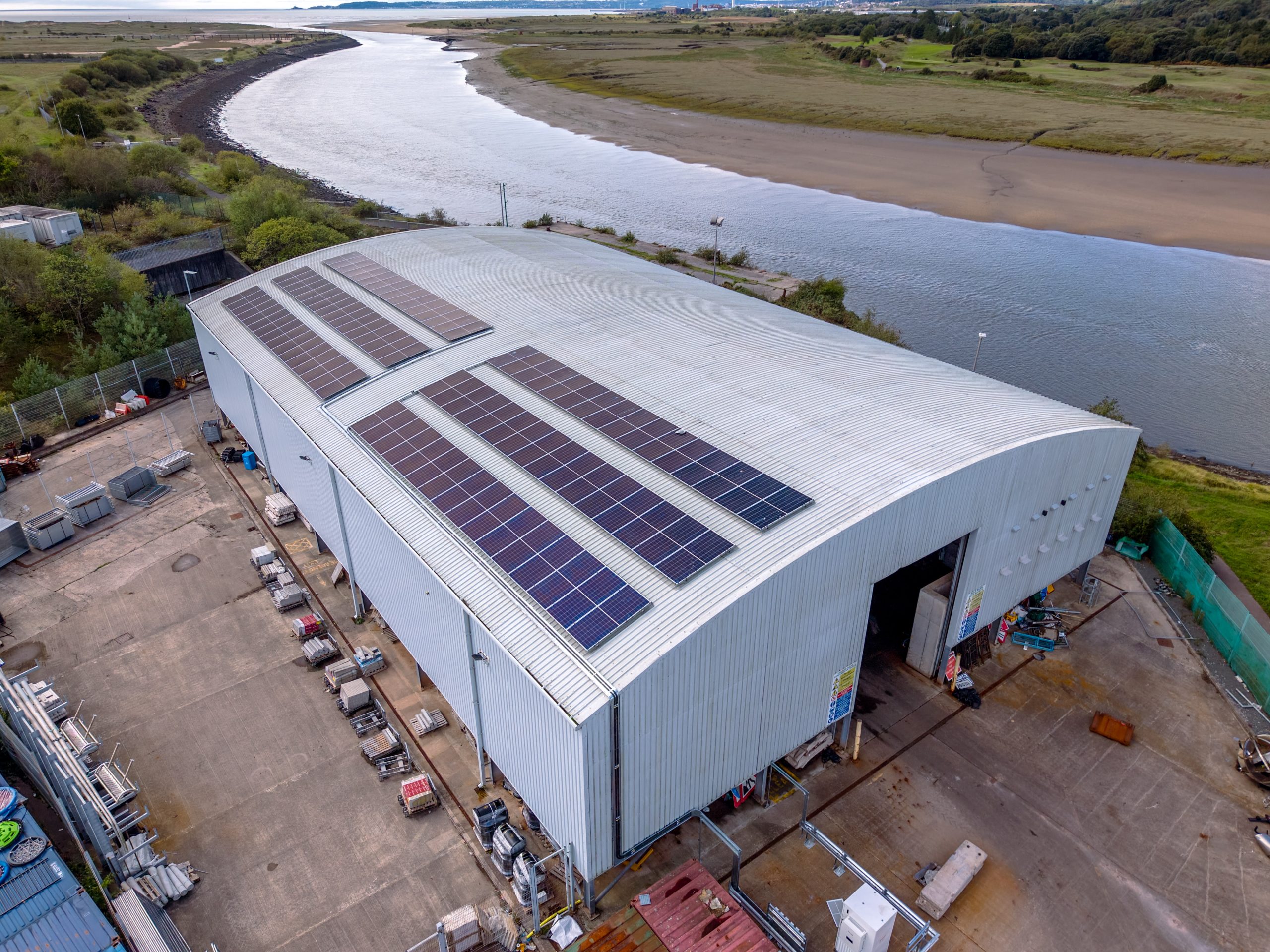
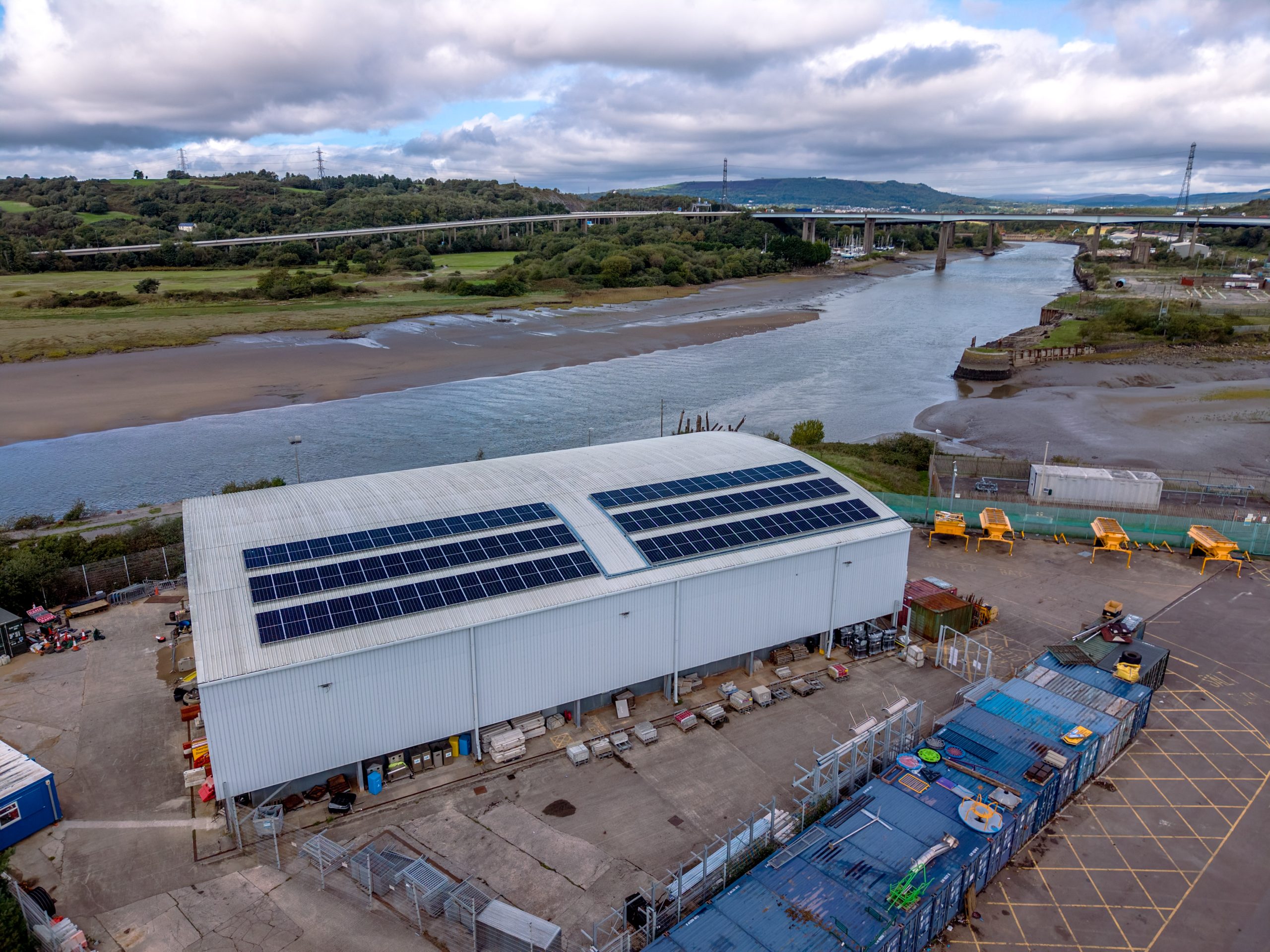
The Salt Barn is a steel portal frame building with a barrel-vaulted roof, clad in curved trapezoidal metal sheeting and rising to a crown height of over 11 metres. To deal with the curvature we used the GS-Roof hanger mounting system from Fastensol. We installed 96 panels, along with a 60kW SolaX Aelio battery on a new concrete foundation to the north-east of the building, protected by crash barriers.
We phased the works so that scaffolding went up on the SRC as it came down on the Salt Barn. The SRC has two complex roof levels. The upper roof is mono-pitched and accessed through an internal service hatch. A 1.2 metre return wall runs along the low end of the pitch, but it was not enough to act as fall arrest, so we scaffolded the whole roof.
The lower roof had two high-risk elements. The first was the existing ManSafe system, a horizontal lifeline that operatives clip onto with a harness and lanyard. It sat too centrally on the roof for the new array layout, so we brought in specialist contractors to inspect it and move it. The second was the roof lights, which covered around 40% of the roof. That created the highest risk on any roof job: falling through a fragile surface.
The council needed a set level of generation from the building, so panels could not be squeezed in between the roof lights. As principal designer, we also ruled that layout out because it would push future maintenance contractors onto fragile sheeting. Instead, we designed three walkable zones between the arrays, with physical barriers and warning signs keeping people out of the channels where the roof lights sit. Most of the roof lights still let daylight into the building, and future maintenance can be done safely.
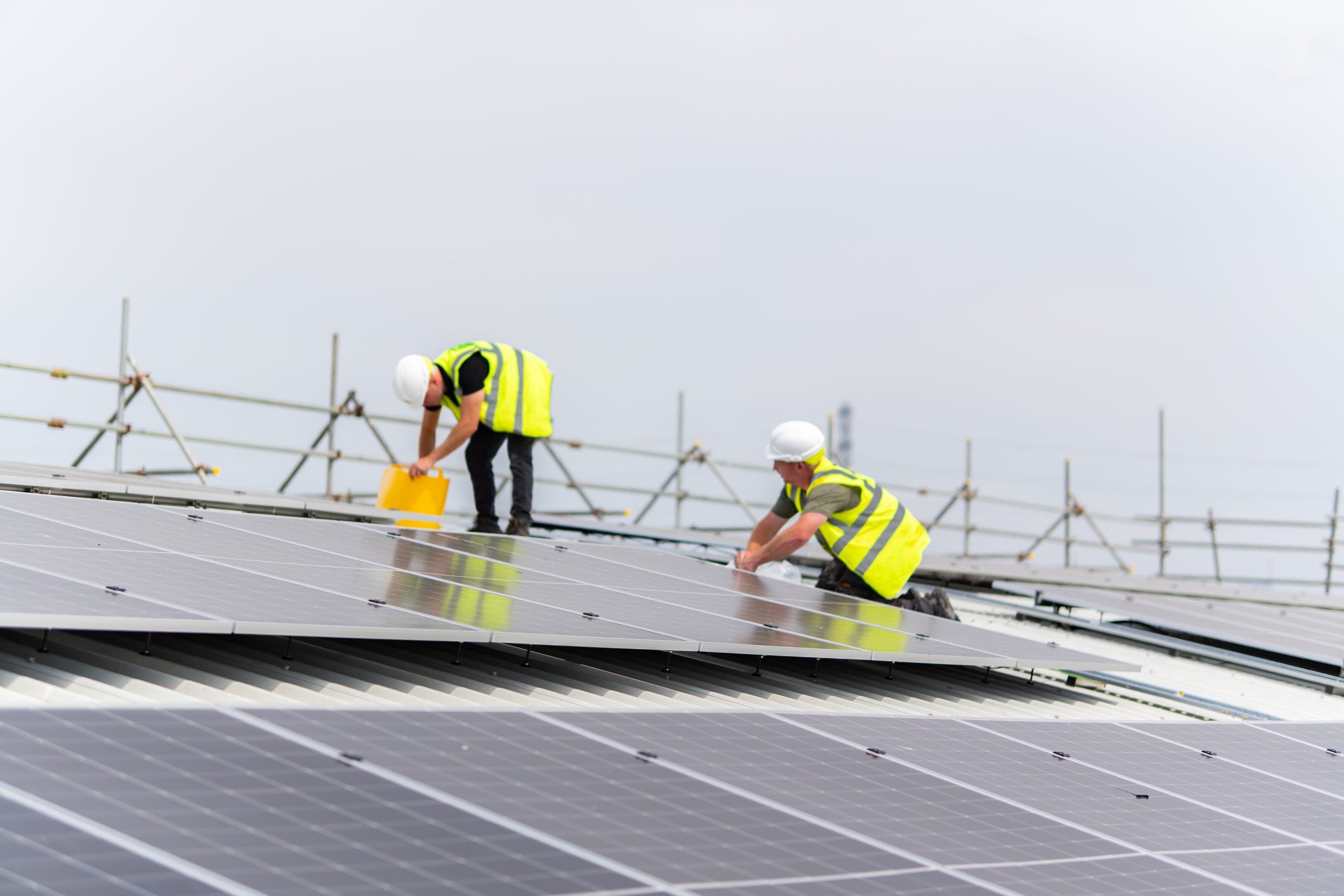
During installation, operatives worked in harnesses on the ManSafe system, which the site manager supervised closely. We also fitted temporary covers over the roof lights so nobody could step through by mistake. We installed 174 panels on the SRC, with a 60kW battery.
A basic string design, with one isolator at ground level and another at height, would have kept the panels generating electricity during a fire, even after isolation. That makes a fire much harder to put out and puts firefighters at risk. We developed the design in line with PD IEC TR 63226:2021, the best practice guidance on reducing fire hazards from solar PV on buildings. Every panel has its own optimiser and can be isolated from ground level, which cuts fire risk and makes conditions safer for firefighters. All PV systems were also integrated with the council’s fire alarm system. The council’s insurer viewed the approach favourably, and the premium was reduced.
While scaffolding went up on the SRC, we found a gulls’ nest on the upper roof. The site manager called in the local authority ecologist the next day. A bespoke risk assessment let work continue on the lower roof, provided the nesting birds were not disturbed. Work on the upper roof was suspended for four weeks, until the ecologist confirmed the birds had left. As part of our social value commitment, we installed 20 bird boxes to encourage nesting for Housemartins and Swifts, free of charge.
The final stage was a 200kW battery, tied into the site’s existing solar car park. It stores additional generation and reduces the council’s reliance on daytime tariffs.
Go-live took place out of hours on a Saturday. We completed a lockout/tagout (LOTO) isolation procedure in line with Neath Port Talbot Council’s procedures. The diesel generators were set to start automatically once mains power was switched off, so they needed their own separate LOTO procedure. The whole system, covering the SRC, Salt Barn and main office block, was commissioned late the same day, and the backup servers stayed live throughout. We issued all electrical safety certificates within a week, and National Grid witness-tested the system without issue.
The project delivered two new rooftop arrays and 320kW of battery storage at one of the borough’s most critical sites without interrupting the council’s services.